Birgün
The Transformation of Architecture into Imagination
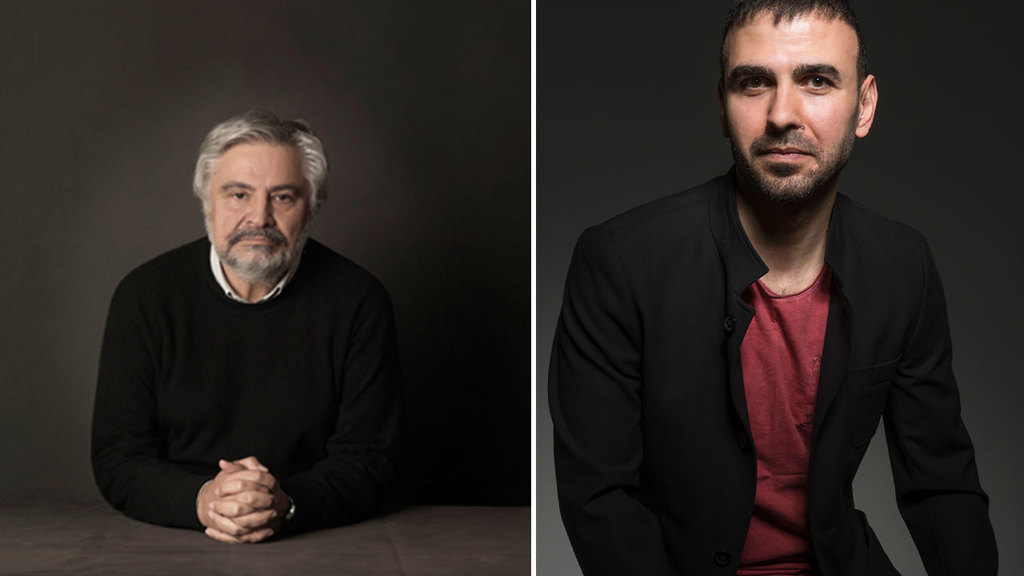
At a moment when architecture is increasingly defined by performance metrics, optimization and technological mediation, “TÖZ / Substance”—an exhibition bringing together art historian and architect Ali Artun with artist Ahmet Yiğider—proposes a return to a more elusive question: what if architecture begins not with reason, but with imagination?
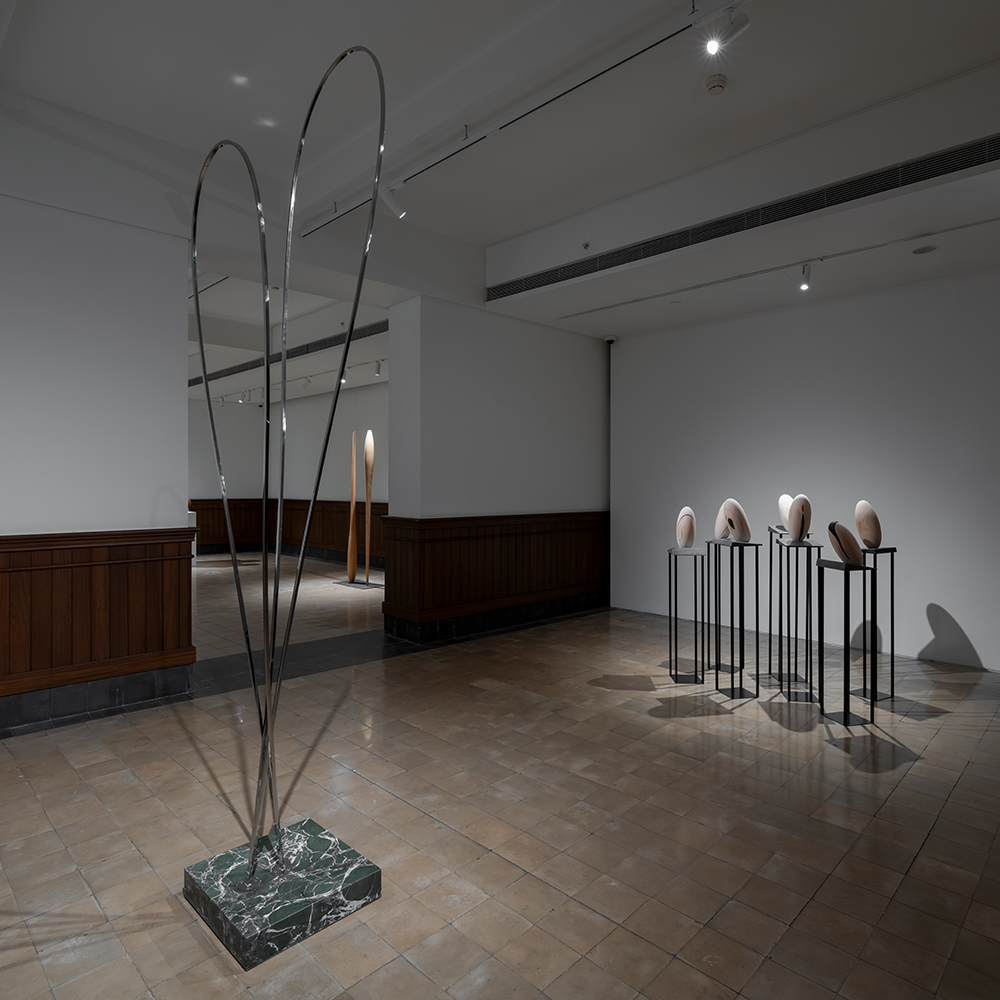
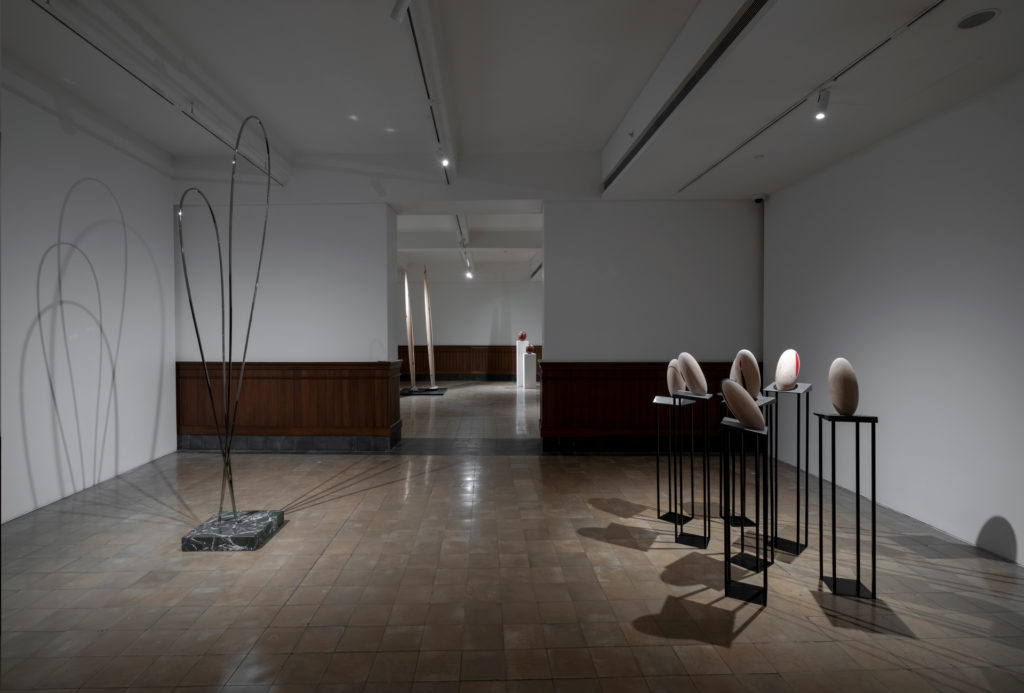
Presented at the Galata Greek School in Istanbul, the exhibition assembles sculptural and conceptual works that resist the reduction of architecture to function, measurement and design logic. Instead, it foregrounds a more archaic and speculative dimension—one in which form emerges from symbolic, poetic and intuitive processes that precede rationalization.
“Today, architecture is framed as functional, rational, scientific,” Ali Artun notes. “But this was not always the case. Its essence—its substance—is not rooted in reason, but in imagination.” For Artun, the works gathered here resonate with a longer counter-history of architectural thought: one that runs from early symbolic structures to the avant-garde movements of the twentieth century, each pushing back against the discipline’s progressive rationalization.
Ahmet Yiğider situates the exhibition’s title as both proposition and method. “‘Töz’ refers to the essence of a thing—its invariant nature,” he explains. “The question it poses is simple, but fundamental: what is the substance of architecture? Why has humanity, across millennia, turned to structures and symbols to make sense of existence? The exhibition points toward a creative source embedded in a shared, ancient memory—architectures that have been built, and those that remain imagined. ‘Töz’ is a way of looking toward that concealed origin.”
Reopening Imagination
The conversation turns to the conditions under which imagination might re-enter a field now dominated by technological systems and functional imperatives.
For Ali Artun, the earliest architectural acts—Göbeklitepe among them—cannot be disentangled from ritual, symbolism and a sense of the sacred. These were not simply constructions, but events structured through meaning. “Their language consisted of numbers and forms—arithmetic and geometry—but these were once symbolic carriers,” he says. “Over time, particularly with the codification of knowledge through print, this symbolic dimension diminished. Numbers and forms became instrumentalized; architecture became design.”
What followed was a progressive severing of architecture from its imaginative ground. Rationalization and functionalism came to define the discipline—an evolution now entering a new phase under the influence of artificial intelligence. The question, implicitly, is whether imagination can still operate within such conditions, or only at their margins.
After Rationalism
The resistance to this trajectory is not new. Ali Artun points to the emergence of postmodern architecture in the 1980s as a decisive moment in which rationalist orthodoxy was openly challenged. Architects such as Peter Eisenman, Frank Gehry, Daniel Libeskind and Bernard Tschumi sought to reintroduce narrative, fragmentation and textuality into architectural practice, drawing on contemporaneous philosophical currents—most notably the work of Jacques Derrida.
The result was a body of work that attempted to re-poeticize architecture. Yet this moment, too, was short-lived. “It was rapidly absorbed into the logic of the market,” Artun observes, invoking Guy Debord’s notion of spectacle. What began as critique was quickly aestheticized and commodified, leaving behind a field in which critical architecture became increasingly difficult to sustain.
And yet, he suggests, this line of thought persists—within certain pedagogical contexts, in experimental practices, and in less formal ways, wherever imagination has not been entirely relinquished.
Form and Shared Memory
Ahmet Yiğider approaches the question from a different register, grounding his work not in historical reference but in what he describes as a transhistorical human condition. Ancient memory and mythology, in this sense, are not sources to be cited, but states to be accessed.
“I am interested in a condition of being that stands outside time,” he says—one in which the human subject encounters nature, the cosmos and its own existence without mediation, and responds through the act of forming. Across disparate cultures and epochs, this encounter has produced recurring formal and symbolic patterns, suggesting the presence of a shared aesthetic memory.
Yiğider’s sculptural and conceptual works trace these continuities. Forms are not treated as discrete inventions, but as manifestations of a deeper, collective reservoir—one that exceeds both individual authorship and historical specificity.
From Latency to Material
If imagination precedes form, the question remains how it becomes material. For Yiğider, the process is structured by a tension between an intuitive, pre-conceptual impulse and the constraints of technique.
“Every act of production engages with material and method,” he notes. “But what determines the work appears earlier—in a more indeterminate space: a desire, a direction, something not yet fully articulated.” What is often described as the “idea” of the work emerges from this state.
Technique, in turn, does not generate form but gives it articulation. It renders visible what would otherwise remain latent—allowing imagined forms to enter into a shared field of perception. In this sense, both art and architecture participate in an ongoing accumulation: an expansion of a collective aesthetic memory shaped by the interplay of intuition and material process.
An Open Proposition
What, then, does “TÖZ” ask of its viewers?
Ali Artun frames it as an invitation to reconsider the structures that organize contemporary experience. “I would hope visitors leave with a renewed impulse to question the architecture that disciplines our time and space,” he says.
Ahmet Yiğider’s response is less declarative, but no less pointed. The works, he suggests, should not be understood as objects to be decoded, but as signals—markers that open onto something less tangible. “They are traces,” he says, “of a creative memory that is still active.”
Rather than advancing a singular thesis, the exhibition proposes a shared condition: one of attention, speculation and inward completion. In encountering these forms, the viewer is not positioned as a passive observer, but as a participant in the reconstruction of meaning—drawn, however briefly, toward that elusive domain the exhibition names as substance.
TR www.birgun.net
Birgün