The Ant Nest, Solo exhibition at CerModern, Ankara, February - March 2025
Curator : Dilek Karaaziz Şener, Texts: Alistair Hicks, Emre Zeytinoğlu, Vedat Ozan, Dilek Karaaziz Şener
The Role of the Sense of Smell in Ahmet Yiğider’s “Ant Nest” Experience
Dilek Karaaziz Şener
“Of the five senses, smell has the closest thing to the full power of the past.”
Andy Warhol
A curious exhibition took place in 1938. This exhibition surpassed all previous exhibitions in terms of space usage and conceptual context, and it also attracted attention because it touched the senses of the exhibition visitor; it made the unique imaginary space that we know as a closed box physically visible and questioned the real world. All the uninhibited visual pleasures of the dream world were revealed. The Exposition Internationale du Surréalisme (International Surrealism Exhibition) opened at the Galerie Beaux-Arts, directed by Georges Wildenstein. On January 17, 1938,¹ almost all of Paris was invited to the opening, and it was requested to come in evening dresses. The invitation to the exhibition announced that various events awaited the guests: hysteria, a sky full of flying dogs, mannequins, Salvador Dali’s (1904-1989) famous Rainy Taxi, paintings, collages, graphics, photographs and an android descended from Frankenstein.
So, who were the architects of the International Surrealism Exhibition, whose interesting dates were written into the story of art with its date of January 17, 1938? The eight-page catalogue of the exhibition is the most crucial memory map that has survived to this day. The names of André Breton and Paul Éluard, who structured the period’s pioneering stones of the Surrealist movement, can be read in this memory. The analysis of the years when the Surrealist movement was on the rise with its statements that “Dada has run its course” is an entirely different topic. What is important here is how the first tangible data of the world of smell and sensation, which we will soon enter, emerged in the ocean of art’s story. Again, suppose we were to write a few words on the exhibition from a retrospective perspective. In that case, it is necessary to emphasize that the names of the artists who revived the Surrealist spirit of the period and inspired young European artists in both literary and visual arts to embrace the movement were not left out. Man Ray, Salvador Dalí, Max Ernst, Wolfgang Paalen, Joan Miró, Yves Tanguy, Rene Magritte. Although these years are known as a period when the seeds of separation and deep debates were sown among Surrealists, this international exhibition gave the impression of unity. At the same time, it was a warning of unity and integration against a world on the brink of a new war.
The Exposition Internationale du Surréalisme (International Surrealism Exhibition) consisted of three sections: Introduction – a courtyard containing Dalí’s Taxi Pluvieux (Rainy Taxi); It consisted of two main sections, the main space arranged by Marcel Duchamp (1887-1968) and illuminated by Man Ray (1890-1976). The space was also given a dark-absurd atmosphere with pieces collected from nature and civilized life: it resembled a cave and a womb more than an exhibition space. ² The exhibition developed by Duchamp was fascinating. Plants, soil and even a tiny pond were created. Coal cellars were placed in every corner of the main space, and coal sacks were hung from the ceiling. Coal dust fell from the sacks into the space and onto the audience. What does this mean? It can be interpreted as a performative approach that spiritually moves the audience with an installation that dominates the space and the activation of the senses. Fear and anxiety are triggered by more than a thousand coal sacks above your head. On the other hand, in a gloomy and cave-like space, the spiritual structure becomes even more chaotic with the effect of the light, and when coal dust that stimulates the sense of smell is added, the ambience becomes more effective. ³
Duchamp’s words in the interview about the exhibition are as follows:
“There was an electric stove in the corner; coffee was roasting. So, a wonderful coffee smell spread throughout the whole space, which was also a part of the exhibition. This was, of course, very surrealistic.” ⁴
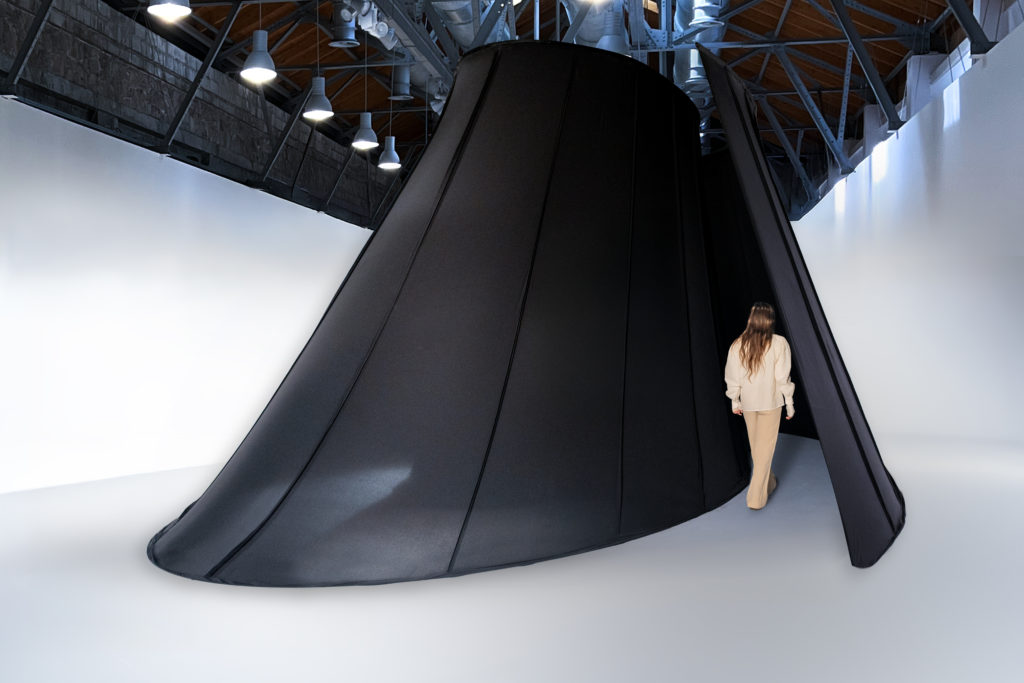
The Ant Nest (10x5x4m); Metal, fabric, micro sounds and scent molecules
We all know that this exhibition’s spatial layout has carried its place in art history from its time to the present day, conveying the spirit of the Surrealist movement in those years.
We have adopted the distinction of the History of Art as pre-Duchamp and post-Duchamp. Before him, the smell still existed, but we can say that no system would reach the viewer’s mind based on the sense of smell and direct their memories and even the future. He tried to confuse the minds of visitors by appealing to all senses and adding smell to the sense of sight, which is the most common in art.
We will return to this subject in the following lines because our main problem will be to address the lines of smell and its role in the journey of art, specifically in the case of Ahmet Yiğider. Yiğider has a life story that combines design and art, and smell is heavily present in his life. Baksı Kokusu (2016), Intellect (2021), Fig, Human, Soil (9th Çanakkale Biennial- 2024) are among his interdisciplinary projects. Yiğider’s passion for nature comes to the forefront of his artistic journey, just like his background in Industrial Engineering. “Does engineering affect his art, or does art affect his engineering?” Questions like these confuse us in every project and exhibition and force us to think about them. Perhaps the most important reason for this confusion is that he places the flawless process of nature at the basis of his art projects with the power of his meticulous personality. He uses the engineering discipline well to learn the material and conduct research. In other words, if engineering means getting closer to matter, material and nature, internalizing and, in short, becoming friends, art builds a strong infrastructure for it in the meeting of reality and thought. Reality and dream, like the surrealist Yiğider, who pursues science and art and chooses nature as his material, encourages his audience to touch yesterday, today and the future by activating memory from familiar smells. Touching the time left behind is not easy for most of us. There is always a trigger and the shaking it gives, and remembrance must come into play. Confrontation is inevitable at this point. The audience should be prepared for wonderful smells or, on the contrary, breathtakingly bad smells; the smell rises, sharpens, and memory is triggered. There is now a smell everywhere in the space; it is a part of the exhibition and the work. He has the leading role. Everything is built upon it and develops, and what will remain with the audience at the end of the exhibition is the smell again. According to Yiğider, the power of smell, which is at the core of many of his projects, to affect human senses is excellent.
We have mentioned Yiğider’s sensitivity to nature; let’s add something here. We evaluate his search with his scientific side and artistic personality. Because in his works, it does not seem possible to separate art from science and science from art, the necessity of evaluating his search, the creativity that stimulates the imagination of smell, by walking on a thin line between science/science, naturally comes to our mind. Sculpture constitutes a significant part of his art practice. Although the primary material for his sculptures is predominantly wood, he likes to wander within an unlimited material field, including metal and stone. In addition, he works on interdisciplinary projects where sense, especially the sense of smell, is at the centre. Although Yiğider’s Industrial Engineering background affects all of his art, he uses scientific methods in his conceptual works focused on smell and progresses through a synthesis between art and science.
“In nature, humans are the only living species that have a different side beyond and above biology. My subject is “existence”,… But at this point, I think that the real issue is “existence” not only for me but for every individual who is “aware of having a side beyond their biology”. I think the crux here is “awareness”. The question is “how do we exist?” I see it as a chance that all of my artistic and professional productions are in creative fields. I create works that I define as interdisciplinary, centred on sense-art-science. These sometimes remain on the border of sculpture technique, and sometimes they are specific to sense/smell. But I think that whatever the technique, what I am looking for is a state of “expression”.” ⁵
Regardless of the origin of his exciting searches, whether it is freedom, passion or an effort to leave a mark on the future, artists establish a connection between their own lives and their works by feeding on the magnificent process of nature. When we bring the subject back to Ahmet Yiğider, especially in his works of recent years, we see the excitement in all his projects centred on the sense of smell, the free structure of nature, and the traces of a feverish process that explores, investigates and carries this structure into his life. Here is one of the stops of this process that developed, grew and turned into excitement together with the Ant Nest sculpture: In his installation “Fig, Human, Soil”, exhibited at the 9th Çanakkale Biennial last year (2024), he addresses the historical and biological relationship of humans with nature by bringing it side by side with another biological species; the fig. Fig is a fascinating species whose evolutionary history dates back 40 million years. Perhaps the oldest phenomenon in human history is hidden in the tree of this fruit: Mythology. Travelling to the ancient times of Mediterranean cultures, especially about the Fig Tree, you will see many hidden stories. For Yiğider, the form of the fruit, its smell, the structure of the tree, as well as the mythical process reflected in words and passed down from generation to generation, the structure and secrets of the tree that defy the years and remain standing, renewing itself and protecting its branches no matter what its story is, never abandoning its roots come to the fore. Some of Yiğider’s artistic productions are based on the assumption of a fictional future in which the fig gains consciousness and replaces the only conscious living form, the human.
“Fig, Human, Soil” exhibited at the Çanakkale Biennial (2024) stands out with linear stalactites produced by weaving cotton threads. These stalactites can be considered a path that is walked on and becomes narrower towards the end. The fig scent on one side of this path turns into the smell of soil with each step taken as the viewer progresses through the installation. On the other side of the path, this time, the human scent turns into the smell of soil with each step. This field of experience inevitably turns into the common concern of Yiğider’s works, namely memory activation. Sensing the scent allows some notes to reach our memory for both soil and fig and perhaps enables the memory to be activated with remembrances from the past or the near future. On the other hand, the artist inevitably wants us to sense the transformation of both fig and human scents into the scent of soil. When the individual smells are noticed, the sense of smell intensifies when it is added to the scent of the space itself, and all the sensory factors collectively attack the viewer’s body first, visually to their eyes, in a sensory context to their nose, and from there to their memory. The smell of soil and figs combines with what the viewer naturally brings when they come to the space, and the smells intensify by coming into contact with each other to provide a completely different sensory experience. Of course, we feel the mixture of these three smells kneaded together in the space.
The process that started with “Fig, Human, Soil” this time evolves into smell research based on the synthesis of science and senses over many years and into the Ant’s Nest, which provides another sensory experience. All the smells of nature enter his field of perception, and perhaps most importantly, his singular or multiple smell-centred approaches in his sculptures and installations allow the smells to merge/integrate with the human smell. So, has he approached the human smell as a scientist, researched it to penetrate it, and created a field of curiosity about how to transfer this to art with his experiments? The answer to the question is “yes”. While making the human scent, he conducted experiments on babies (under the supervision of their parents), especially in the fourth and fifth-month stages. As it is known, the placental scent is essential in the first months of a newborn baby. On the other hand, food is an essential factor that determines the human scent. For this reason, Yiğider prefers the stages in question when breastfeeding is still dominant. He examined the unique and odour-neutral fabric pieces placed on the neck area of the baby while he was sleeping at night by putting them in controlled glass tubes the following day, using the “Gas Chromatography and Mass Spectrometry”⁶ technique. Thus, detecting the aldehydes and other volatile molecules that make up the baby scent became possible. It will be shown as one of the purest, most innocent scents in the world, perhaps in all cultures in nature.
“Scent is a matter related to vitality. If there is scent, there is life; if there is life (strong or weak, at our perception threshold or not, it makes no difference), there is scent,”
says Ahmet Yiğider. When he considers his sculpture and his conceptual works in the field of sense and smell together, he argues that seeing them as two separate media can be a perspective but seeing smell in the field of sculpture creates a separate experimental field.
While sculpture is defined so concretely and physically within art, how can something invisible, namely sense and sense of smell, penetrate the field of sculpture? Can it be the material, even the primary material, of sculpture? When we reach the threshold of difficult questions, we find the answers through Yiğider’s scientific analysis and then turn them into art practice, even concrete forms with a visual installation.
If we focus on Yiğider’s Ant Nest installation, the artist first began to research ants being superorganisms that exhibit social behaviour and developed his practice on its relationship with smell. The actions of ants in hunting, finding food, stockpiling, ensuring security, fighting, complying with social rules and punishing those who do not comply are provided by pheromone secretion and the other party’s sense of smell (olfaction). In his studies on the smell secreted by ants and their perception, Yiğider has made essential findings with molecular analyses using high-tech methods such as Gas Chromatography-Mass Spectrometry (GC-MS) and Flame Ionization Detector (FID). The basis for these findings is based on sensory and molecular analyses of chemicals secreted by ants in the odourless tube (neutral olfactory field) at different stress levels. In the molecular separation he made on the ant’s body tissue, he reached over 1000 molecules. According to Yiğider, this information represents a giant encyclopedia of nature.
The artist says the following about his studies on the smell of ants as a scientist:
“Some of these molecules provide clues about the olfactory character of ant secretions. In the following process, by combining this complex molecular inventory, literature knowledge and, most importantly, my sensory analysis findings, I could define an odour composition open to human experience. In this sensory experience that we reached by passing through a narrow gap in the obstacle that determines the boundary of the space, I wanted to pay attention to a silent narrative, a whisper between humans and the ant species with the power of art, senses and especially the sense of smell. This interesting living species has the largest animal biomass in nature, even though it is one of the smallest bodies we can see with the naked eye. The ants, which I hope to get a sensory step closer to here today, are on the trail of their evolution, ‘eaux-social’ life and smell!” ⁷
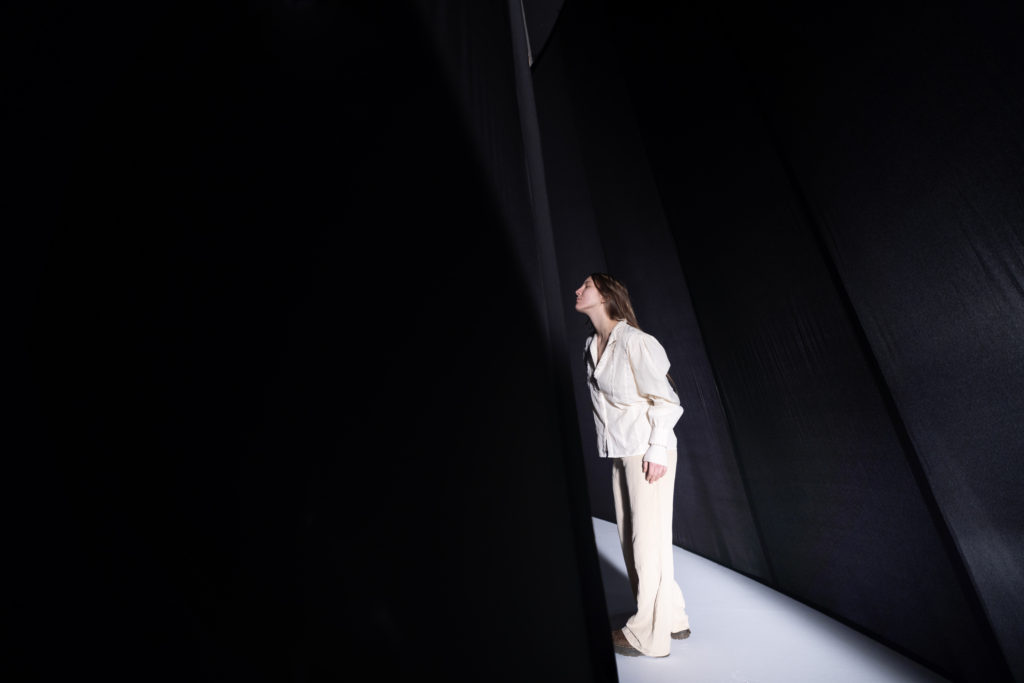
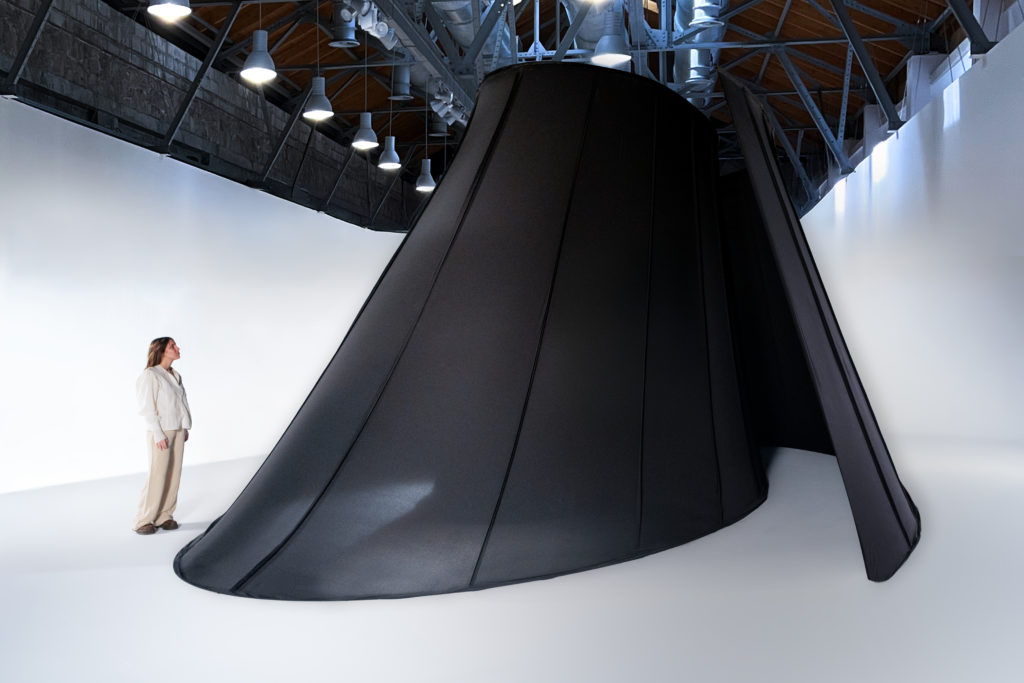
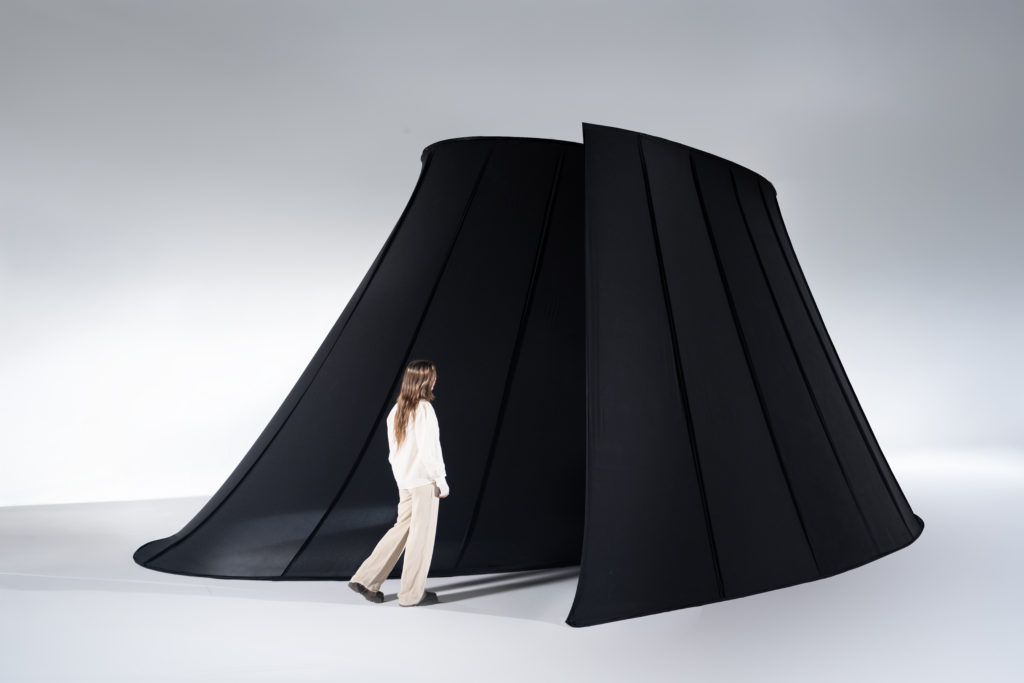
Ahmet Yiğider plays a little game with the viewer’s memory in his Ant Nest installation. The giant mass of the installation is designed as a playground for people of all ages. Let’s remember that ants have a place in all of our lives as a childhood story. Although most people today live an urban life, they have encountered an ant somewhere. The Ant Nest is like a jar of remembrance at this point. A dark environment has been created where you can focus your perceptions on only one point while advancing in the spiral form. Where does this road end? To answer the question, it is necessary to travel through the narrow path inside the spiral towards the centre of the smell. As you travel in the deep spiral, the scent, whose power increases violently, is accompanied by a sound. As the path narrows, the effect of the sense of sight decreases. How will the road end when the eye can no longer see to reach the centre? The apparent sense of smell will play the leading role and attract the viewer with the sound.
The scent in the Ant Nest is not coincidental; it exists; it is present. The artist has intentionally distributed it from a single point, the centre, within the monumental black structure (it looks just like a cave, or you can call it a nest). The smell is a part of a larger whole as an art object. The nest has emerged from the monumental tunnel underground to the surface with an even more surreal attitude. Naturally, taking its scent with it! The role of spaces is quite evident when carrying scent into the realm of art.
If we convey the studies carried out in recent years and the practices in this context, exhibition halls, art galleries, and museums can become privileged areas with the pleasure of activating memory visually and olfactorily and then remembering, learning and memorable experiences. Ants are an interesting species. Whether in nature or modern living spaces, parks, gardens, open or closed spaces, in our homes, it is perhaps the smallest species of living we can notice with the naked eye. Yiğider emphasizes that the total biomass of this species in the world is much greater than the biomass of humans. In addition, ants are among the rare species that exhibit complete social behaviour. Full sociality requires giving up the most essential characteristics of life, including reproduction, for the common benefit of the group or colony, and we see this in ants. What is more interesting is the presence of scent in all vital activities of ants. We have previously stated that ants use smell in communication. Feeding, finding prey, perceiving danger, spreading this information and many other things are all done through smell. Of course, this is where the chemicals they secrete, called pheromones, come into play.
Ahmet Yiğider, in his Ant Nest installation, settles into the heart of Ankara CerModern’s hangar exhibition area through ant smell, transforming his scientific analyses, findings, discoveries and productions into a complete display of power with the language of art, with smell and the monumental structure of his sculpture. The Ant Nest is alone, but it will multiply by taking over the sensory field of the viewer. It will draw in and integrate them into its own blunt body. Memory will reveal the power of this integrity, and the trigger will be the absolute presence of the ant that will be smelling with curiosity.
Yiğider’s installation has brought the artist to a very different point in his sculpture practice, which has been going on for years. Sensuality has taken precedence over the material and has created a performative experience area where the main focus meets the smell. The viewer is no longer around the sculpture but directly inside it. We can even talk about the impression that the artist wanders in the universe of senses. While providing this, the smell is also an essential tool of sensuality; it even comes to the forefront in the installation as a complement: The object is autonomous; as an aesthetic beginning, the viewer steps in, experiences the sculpture, penetrates it, get to the centre of the smell, and when he returns, the story changes.
Smell: It is life. Life is a story, and stories gain meaning as they are told. For stories to be conveyed, they must be remembered and told. Therefore, smell leads to memory and remembrance.
Construction / structure: An installation that will leave the viewer in suspense. From the outside, a monumental sculpture setup always reminds me of Tatlin’s “Monument to the Third International” and triggers me to roll back the Art History roll. Ant Nest is different regarding ideology and the fact that it draws the curious viewer into the setup through the narrow doorway. Inside, we are moving through a tunnel where smell comes into play. Can you walk inside an Ant Nest? In reality, it is pretty challenging to do this; we must turn into Alice physically; in other words, we must shrink. Afterwards, to continue our everyday lives, we have to drink fairytale drinks that contain compounds we do not know. Just like Alice, but do we have to be seven years old to be able to do these things and to be able to dream? Yiğider’s Ant Nest prevents the trap of our imagination as Alice and allows us to progress by feeling like we are advancing in an underground cave. It’s nice to imagine. The sense of pleasure that awakens in the viewer within the work pushes the boundaries of the land of dreams. Alice falls into the rabbit hole with great curiosity, and the adventure begins. The Ant Nest, on the other hand, does not invite you to take part in the adventure and be enchanted by the scent with its monumental entrance, but attracts your curiosity and draws you in.
Sensory: The activation of the sense of smell. In the Ant Nest, there are three senses at play. Vision (monumental structure), smell (and smell), hearing (a monotonous sound that is first felt faintly outside the structure with the smell and then increases when you enter; perhaps a tone, maybe just the rhythmic sound of being alive, maybe an ant singing, possibly nothing at all)
What is Yiğider longing for?
To stimulate memory with a scent below the interest and natural perception power of many people, to have a little fun, to smile, maybe to go back to childhood, and most importantly, to think.
Yes, to think! The most needed and longed-for action in today’s conditions!
- Uwe M. Schneede, Exposition Internationale du Surréalisme, Paris 1938, Çev: Mustafa Tüzel, e-skop Dergi, Sayı 6, 21.5.2014. [Erişim: 14.01.2025].
- Aktarılmış Kaynak: e-skop Dergi, Exposition Internationale du Surréalisme, Paris 1938.
- The 1938 Exposition Internationale du Surréalisme and Acte Manqué: The Terror of Memory and the Terror to Come, Academia.edu. [Erişim: 16.01.2025].
- Aktarılmış Kaynak: e-skop Dergi, Exposition Internationale du Surréalisme, Paris 1938.
- Esra Oskay & Seniha Ünay, Koku, Geçmiş, Gelecek, Tahayyüller, Çapak Dergisi, Sayı 5, 2023.
- Gaz Kromatografisi – Kütle spektrometrisi (GC-MS) incelenen uçucu bileşiklerin moleküler yapısını anlamak için yüksek teknoloji barındıran cihazların kullanıldığı bir analitik kimya yöntemidir. Kimya, biyoloji, genetik gibi doğa bilimlerinin dışında kriminoloji gibi özel alanlarda kullanılmaktadır. / Gas Chromatography – Mass Spectrometry (GC-MS) is an analytical chemistry method that uses high-tech devices to understand the molecular structure of volatile compounds under examination in natural sciences fields such as chemistry, biology, and genetics or particular fields such as criminology.
- Yiğider, Ahmet. (2024). CerModern ‘Karınca Yuvası’ Notları.